跳到主要內容

COSCUP 2020 - Kicks Off with 5G and a Big Crowd on the First Morning

 【COSCUP 2020】Kicks Off with 5G and a Record Crowd on the First Day.
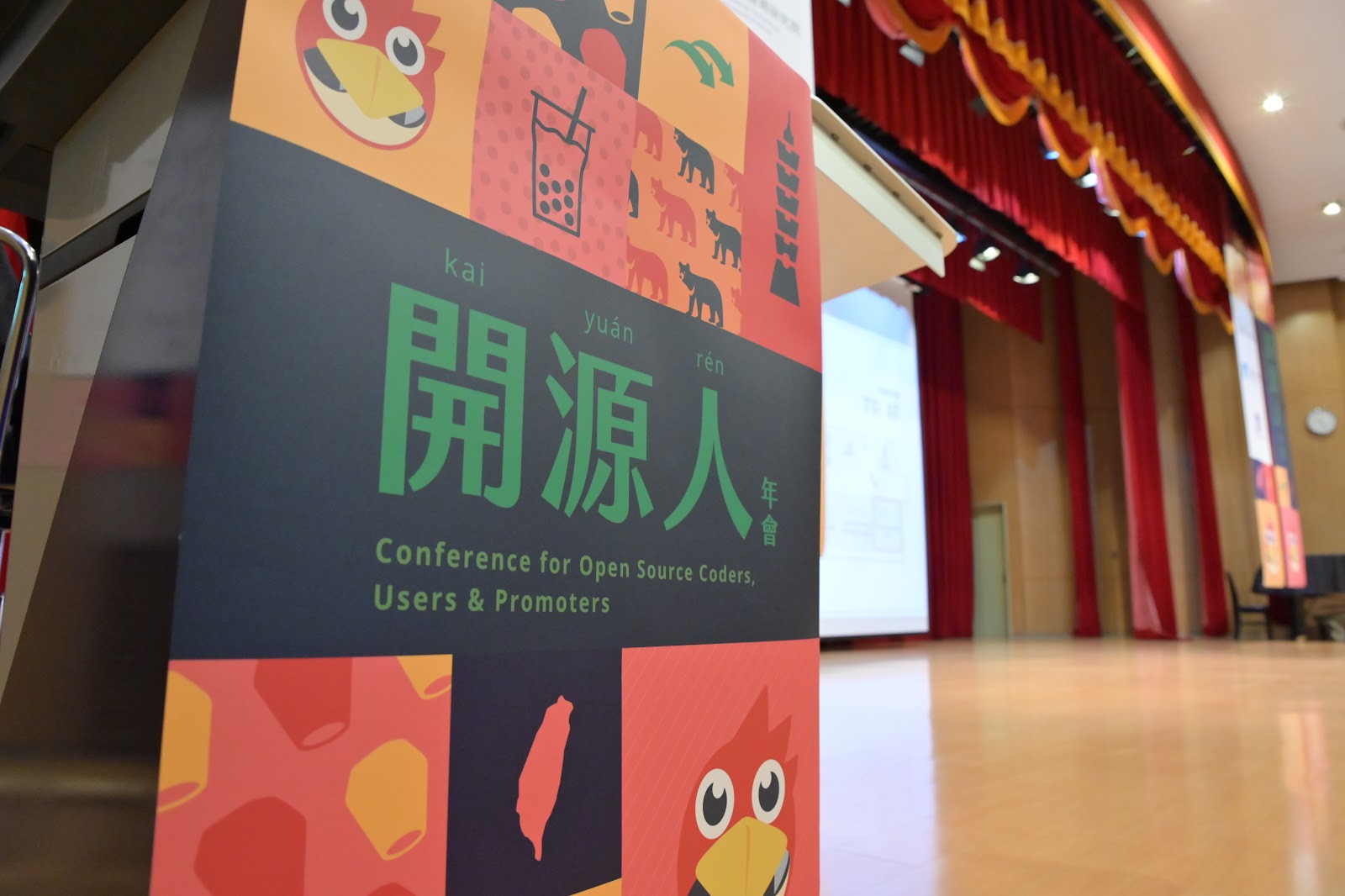

TAIPEI, Aug 1, 2020 -- COSCUP (Conference for Open Source Coders, Users, and Promoters) was held today at the National Taiwan University of Science and Technology in Taiwan. This year's agenda included the hottest topic— 5G, which was the prelude to COSCUP's 15-year history. In the morning, more than 1,200 people had already poured into the venue to participate in various open-source sessions.

COSCUP 2020 held at the National Taiwan University of Science and Technology, Taiwan
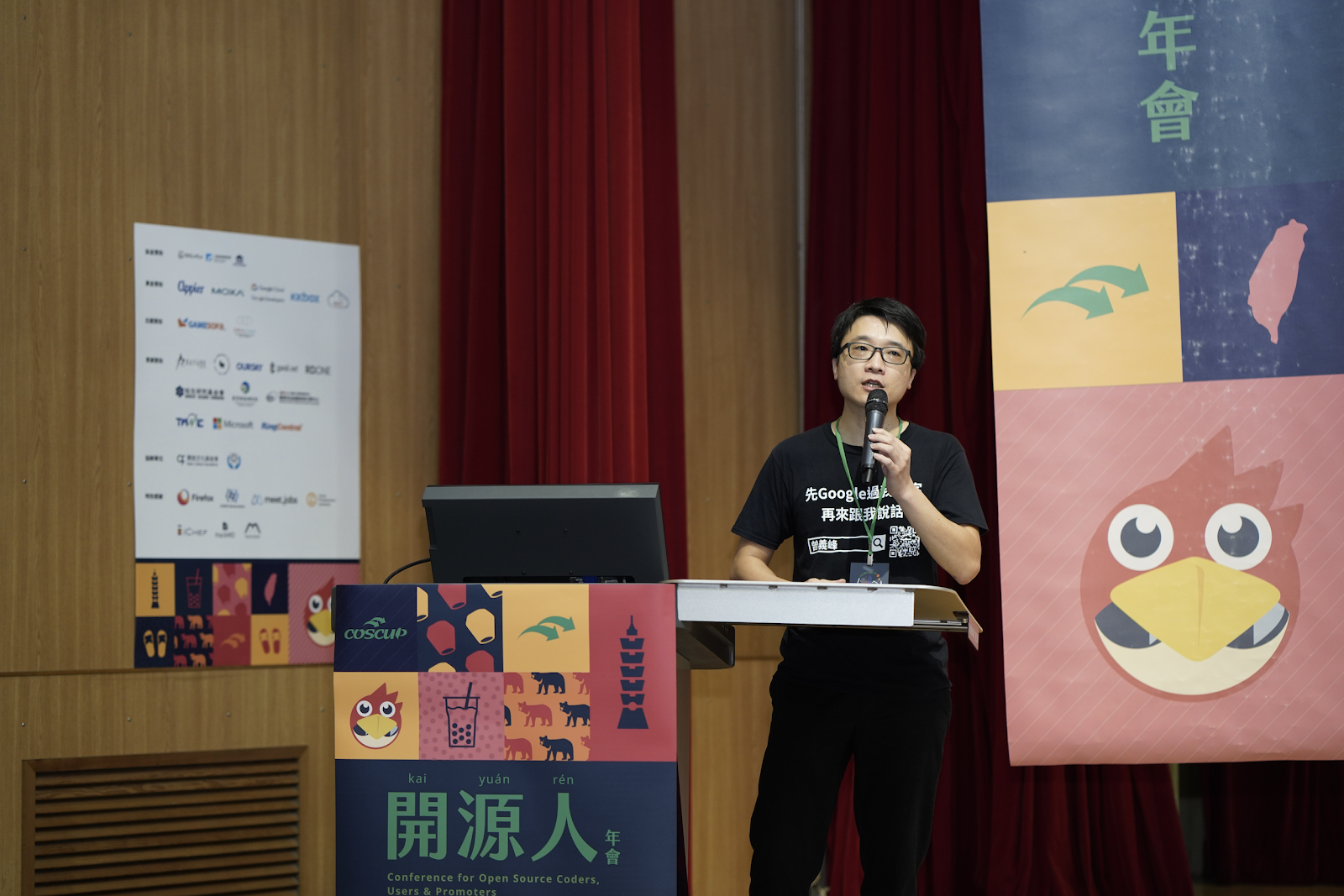

COSCUP, the largest open-source community conference in Taiwan, was held on August 1st and 2nd at the National Taiwan University of Science and Technology. Although many international guests or speakers were unable to attend in person due to the pandemic, they did not miss the event and participated remotely. For example, the creator of Vue 3, Evan You (尤雨溪), shared the technical difficulties and design trade-offs involved in open-source projects remotely.

COSCUP Opening


At the opening ceremony, Ant welcomed and thanked COSCUP volunteers, speakers, and the audience for their enthusiastic participation, as well as co-organizers Open Culture Foundation and National Taiwan University of Science and Technology’s Department of Electronics and Computer Engineering. Above all, Ant thanked the sponsors who gave COSCUP the strongest support: the 5G Office from DoIT MOEA, the Industrial Technology Research Institute, the Institute for Information Industry, Appier, Moxa, KKBOX, Oracle, and Google Cloud.


This year, COSCUP also adopted a multi-track agenda, with different themed tracks and multiple sessions running at the same time. The program included the most popular topics, such as 5G, mask map, as well as an exclusive agenda for open-source newcomers and designers. Audrey Tang, the Digital Minister of the Executive Yuan also reflected on the meaning of open-source with Chien-Hung Huang, the Director of the Kuandu Museum of Art. 
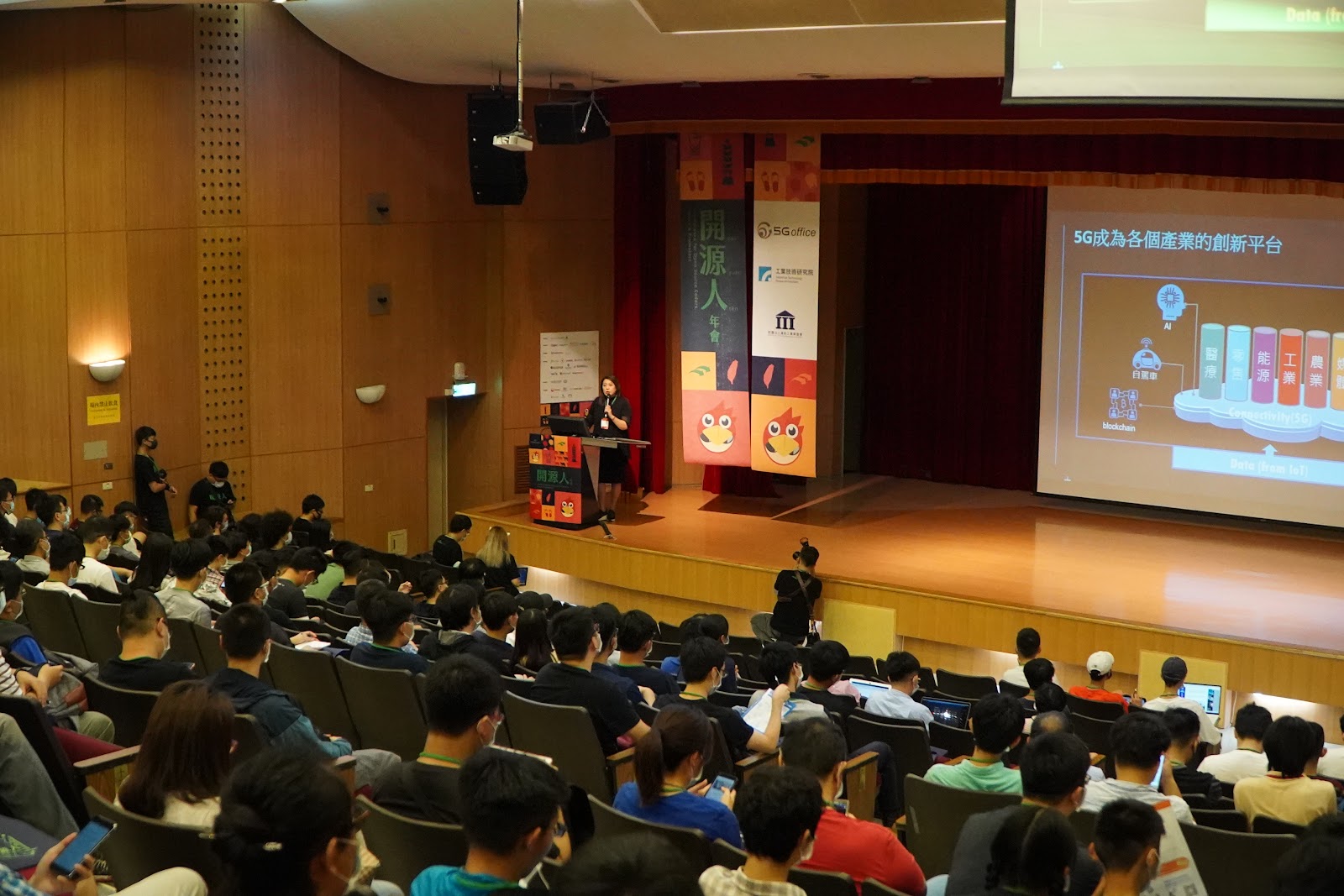


Former NCC Director Ting-Yi Zhan shares the opportunities of 5G and open source

The first main session began with the former NCC Director, Ting-Yi Zhan, sharing the opportunities for open source in 5G, how 5G will connect different sectors of industry, leading to more diverse and vertically integrated applications. According to Zhan, the industry is working on standards and technical specifications to define open interfaces between radios, hardware, and software, so that multiple vendors can be used to co-construct networks. Compliance with the 3GPP R16 standard, a completely open platform from the network core (5GC) to the access network will be an opportunity for open source and co-creation and development.

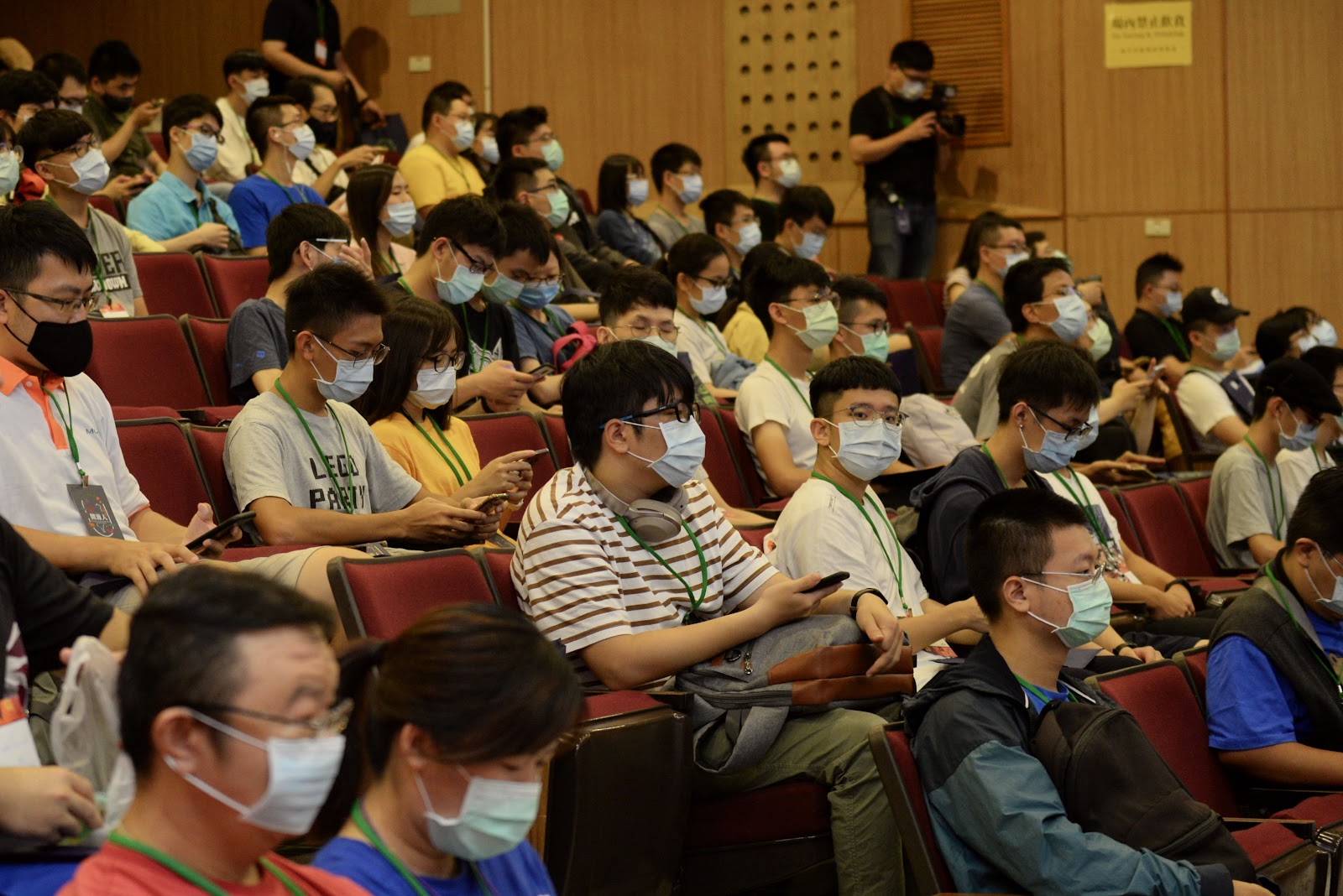
Over 1,200 people participated in COSCUP on the morning of the first day


For the first time this year, COSCUP offered free entry without registration, and there was a huge crowd in the morning. However, participants had to fill out an online “Health Declaration Form” before entering and must wear surgical masks throughout the whole session.

COSCUP attendance must wear a mask and fill out a health declaration form

Participants can check the official COSCUP website (https://coscup.org/2020/en) for details of the agenda and speakers, as well as the number of participants in the conference room. 


Special thanks to our sponsors for their support to COSCUP 2020 despite the impact of the pandemic:


The Titanium level sponsor: 5G office

The Gold level sponsors: Appier, Moxa, KKBOX, Oracle, Google Cloud

The Silver level sponsors: Gamesofa, OpenChain

The Bronze level sponsors: Rayark, Sky Mirror Technology, Oursky, Gandi, RD.ONE, Archilife Research Foundation, Agricultural Technology Research Institute, National Center for High-performance Computing, TWNIC, Microsoft, RingCentral

The Special Thanks level sponsors: Mozilla, ZUSO, Meet.jobs, LPI, iCHEF, HackMD, Micare

The Co-organizers: Open Culture Foundation, National Taiwan University of Science and Technology’s Department of Electronics and Computing Engineering

COSCUP 2020 Official Website: https://coscup.org/2020/en

About COSCUP
COSCUP (Conference for Open Source Coders, Users & Promoters) is an annual conference held by Taiwanese open-source communities since 2006. It’s a major force of Free software movement advocacy in Taiwan. The event is often held with talks, sponsor and community booths, and Birds of a feather. In addition to international speakers, many Taiwanese local open-source contributors often give their talks here. The chief organizer, staff, and speakers are all volunteers. The mission of COSCUP is to provide a platform to connect open-source developers, users, and promoters.


Venue Map


------

Media Contact:

Liting +886-988-256-861/pr@coscup.org


留言

這個網誌中的熱門文章

利用 Jitsi 建立個人化的視訊會議平台

  近期因為疫情的關係,越來越多企業開始實施分流或在家工作,視訊會議的需求也日益增加。 在商用解決方案選擇上,有不少企業會選擇知名品牌的產品,例如  Cisco Webex 、 Google Meet 、 Microsoft Teams 、 Zoom  都是很不錯的方案。 KKBOX 集團在去年便試行及做好充分 work from home 的準備,今年五月也因應疫情升溫,全員 work from home 至今兩個月有餘。 當然,取之 Open Source,也要對社群有些貢獻。在這一屆 COSCUP,我們要來介紹 Open Source 圈中也很知名,效果也很不錯的一套視訊會議平台: Jitsi 。 除了基本的視訊會議功能外,在最後我們也會示範如何透過 Jitsi 畫面輸出到 YouTube/Twitch 或其他支援 RTMP 的平台進行直播。 由於篇幅有限,且 Jitsi 可以調整的細節非常多。今天我們純粹很快速的示範,如何簡單的建置出一個 Jitsi 環境,並提供單場會議內容錄影或直播。 Jitsi 的文件可以在 這裡 找到。 今天透過 AWS Lightsail 的 $10/month instance(1 core CPU + 2GB RAM + 60GB SSD),作業系統則是 Ubuntu 20.04 來示範。當然,使用其他 VPS 亦可,大同小異,這邊直接跳過 VPS 相關的建置過程。 *firewall 相關資料參考 這裡 及 這裡 。 針對系統做必要的更新 基本的 apt repository 更新: $ sudo apt update 因為後面要示範的會議錄影及直播需要使用 ALSA loopback device,如果是 EC2 or Lightsail 則需要額外安裝 generic kernel( 註 ): $ sudo apt install linux-image-generic linux-headers-generic linux-image-extra- virtual 接著做系統套件們的更新: $ sudo apt dist-upgrade $ sudo apt autoremove 如果是 AWS EC2 or Lightsail 則需要另外再將預設的 AWS optimized kernel...

鑽石級贊助商 - KKBOX 帶你打造具備 NLP 功能的 Telegram Bot (上)

打造具備 NLP 功能的 Telegram Bot(上) 最近因為一些契機學了 Python 3,用它做了一個 Telegram Bot ( GitHub 連結 ),裡面用到 NLP Service,用上下兩篇文章記錄一下實作過程還有眉角。上篇首先教大家如何做一個最基本的回聲 Chatbot,接下來我們可以透過 NLP 服務,讓 Chatbot 根據使用者不同的訊息做回答,這樣就變成更加人性化的聊天機器人囉! 使用的工具及服務: Python 3 (for develop) pipenv (for dependency management) OLAMI (for NLP) ngrok (for testing) Step 1. Creating new bot Telegram 很有趣的地方在於,與其他通訊軟體(Line、Messenger)相比,開發者管理 Bot 的方式也是透過官方提供的一位 Bot 在處理的,它叫做 BotFather (眾 Bot 之父 XD)。如果已經有 Telegram 帳號,只要加 BotFather 為好友,就可以開始管理你的 Bot。 加入 BotFather 好友後,它會親切地問候,並告訴你他能為你提供什麼服務。 I can help you create and manage Telegram bots. If you're new to the Bot API, please see the manual ([https://core.telegram.org/bots](https://core.telegram.org/bots)). You can control me by sending these commands: /newbot - create a new bot /mybots - edit your bots [beta] /mygames - edit your games ([https://core.telegram.org/bots/games](https://core.telegram.org/bots/games)) [beta] Edit Bots /setname - change a bot's name /setdescr...

機器學習的五大實務問題:對企業的影響與相應的化解方式

Appier 首席機器學習科學家 林守德博士 正如 Jason Jennings 及 Laurence Haughton 在《以快吃慢–如何藉速度在商戰中克敵制勝》一書中指出──未來,不是大公司吃掉小公司,而是速度快的公司吃掉速度慢的公司。 從現在開始,唯有善用適當的資訊快速做出決策的企業,才能成為戰場上的贏家。 機器學習技術驅動了這場變革。無論企業是嘗試向顧客提出建議、改進生產製造流程或應對市場的變動,都能運用機器學習技術處理大量的資料,進而提高自身的競爭優勢。 然而,機器學習雖能創造大好機會,卻也同時帶來了相應的挑戰。機器學習系統需要大量的資料,以及執行複雜的運算能力。顧客期望改變、出乎意料的市場波動等等外部因素,都意味著機器學習模型的運作並不是百分之百的自動,往往仰賴許多外部的資源來作監控及維護。 此外,機器學習也有不少尚待解決的實務問題。以下將深入探討機器學習的五大實務問題,以及這些問題對企業應用會產生的影響。 1. 資料品質 機器學習系統仰賴資料進行訓練,而訓練資料在廣義上可分為「特徵」及「標籤」兩種類別。 「特徵」是輸入機器學習模型的資料,像是來自感測器、顧客問卷、網站 cookie 或歷史資訊等等。 然而這些特徵的品質可能良莠不齊。舉例而言,顧客在填寫問卷時可能會隨便填寫,或對題目略而不答;感測器可能因失靈而回傳錯誤資料;即使使用者的網頁行為明確,網站 cookie 回報的資訊也可能不完整。 此外,資料也可能包含雜訊,當無謂的資訊夾雜其中時,機器學習模型將會受到誤導而做出不正確的預測。 相較於「特徵」,「標籤」的正確性與穩定度更為重要。標籤是機器學習模型最後輸出的結果。所以需要在訓練的時間利用正確的結果教導機器學習模型。標籤的稀疏性也是個問題,這是當系統已掌握大量輸入的資料卻對輸出的結果沒有把握時出現的現象。在這樣的情況下,將難以針對該模型偵測其特徵與標籤之間的關聯性優化,甚至需要耗費額外的人力干預,將標籤與輸入資料關聯起來。 機器學習需仰賴輸入與輸出資料的關聯,才能具備足夠的泛化能力以預測未來行動並提供相關建議。因此,如果輸入資料過於雜亂、殘缺或有所偏差時,將可能難以理解某輸出/標籤的產出原因。近年來機器學習也開發出許多先進的方法如半指導式學習,轉移學習來處理這樣的問題。 2. 複雜性與品質的取捨 建立強大的機器學習模型需要大量的計算資源來處理特徵和...